


DYNAMIC LANES IN AUCKLAND: Smarter use of existing roads
Dynamic lanes are changing how Auckland manages congestion, using existing road space more efficiently instead of building new lanes. This case study outlines what dynamic lanes are, how they work in Auckland, and key lessons for future New Zealand projects.
Dynamic lanes change the allocation of traffic lanes based on traffic demand, using a combination of systems such as Variable Message Signs (VMS), CCTV cameras, lane signal units, Internally Illuminated Pavement Markers and Auckland’s Transport Operations Centres. Operators can respond quickly to congestion, incidents or unusual conditions, adjusting lane configurations to suit morning and afternoon peaks.
Unlike permanent lanes, dynamic lanes are usually time-bound: for example, they may support inbound traffic in the morning peak and reverse to support outbound traffic later in the day. This makes them a flexible, adaptable solution for corridors with heavy commuter demand and limited space for widening.
Early Auckland Successes
Auckland was an early adopter of dynamic lane concepts, particularly on bridges and constrained arterials.
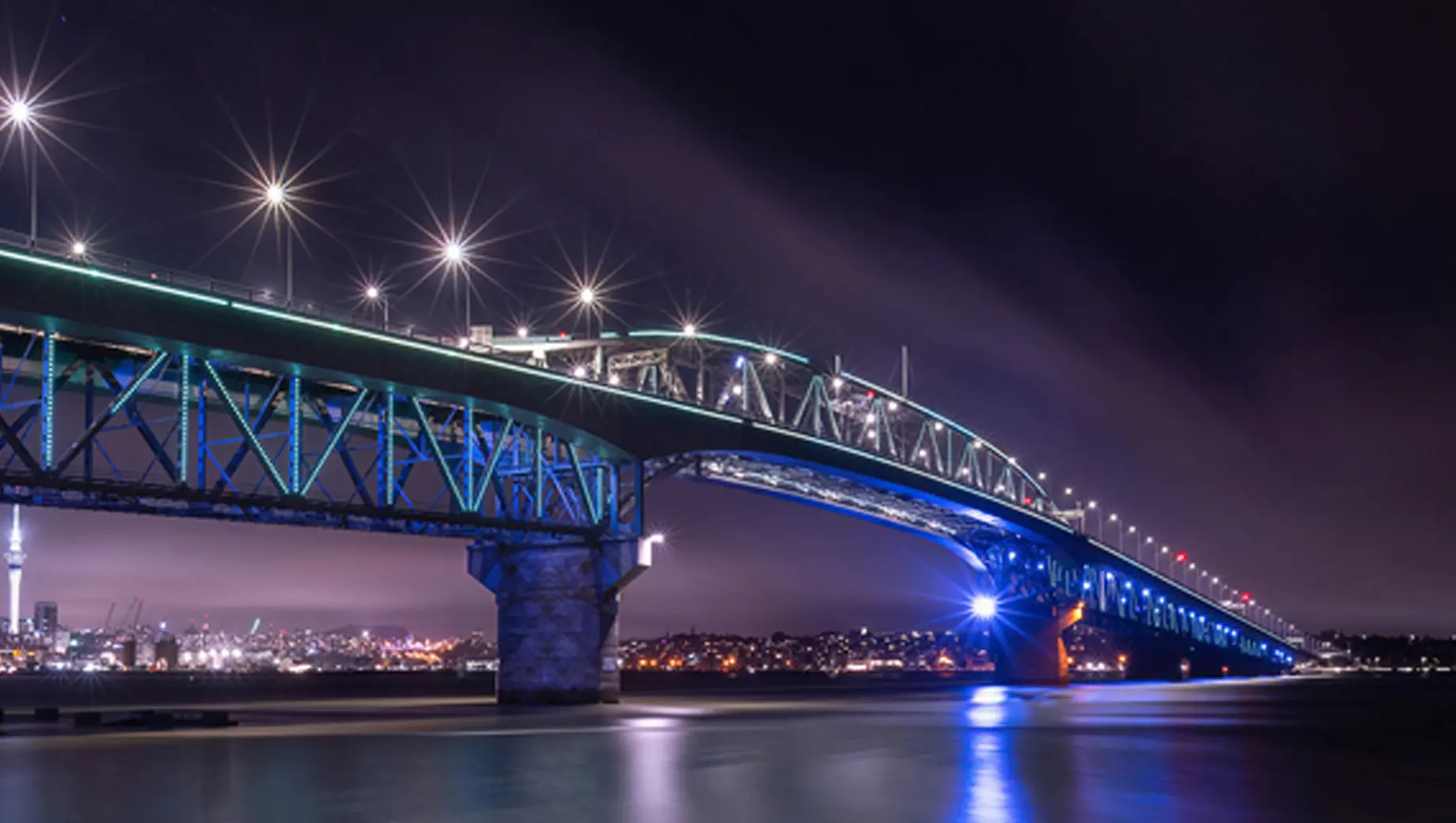
Auckland Harbour Bridge:
In place since 1990, the moveable median barrier is one of the first permanent installations of its kind worldwide. It enables up to five inbound lanes in the morning and reverses to prioritise outbound travel in the afternoon, using a physical barrier for safety and clarity.
Panmure Bridge (East Auckland):
This three-lane bridge runs two lanes citybound in the morning and two lanes outbound in the evening, with the central lane closed outside peaks for safety. It uses time-based lane shifts rather than a moveable barrier, showing that simpler applications can still deliver meaningful benefits.
Whangaparāoa Road: A Transformational Trial
Whangaparāoa Road was the first major dynamic lane trial outside bridges and a turning point for Auckland’s network. Previously a two-lane corridor with a flush median, it suffered from severe congestion and rat-running through residential streets such as Red Beach Road.
To address this, a dynamic centre lane was introduced, creating two city bound lanes in the morning and two east bound in the evening while reverting to a flush median off-peak to protect side-street and driveway access. NZTA‑approved “Smart studs” (internally illuminated pavement markers) were used to manage the lane configuration.
The outcomes were significant:
- Average peak travel times reduced by around 7 minutes.
- Through-traffic on Red Beach and other bypass routes reduced.
- A $30 million fourth-lane construction project was avoided, replaced by a $3 million dynamic lane solution with a benefit–cost ratio (BCR) of 3.4, paying for itself within four years.
Redoubt Road: Unlocking a Congested Interchange
Redoubt Road, between the Southern Motorway and Hollyford Drive, experienced chronic afternoon gridlock at its motorway interchange. A peak-only reversible lane was introduced to make better use of existing capacity, supported by overhead gantries and enhanced lane signals.
The project delivered:
- Improved local travel times and more reliable journeys.
- Smoother access to the Southern Motorway, easing pressure on Great South Road/Manukau Station Road intersection and nearby corridors.
- A new pedestrian crossing to improve pedestrian safety.
Maioro Street: Next-Generation Bus Priority
The Maioro St project marks the first attempt in Auckland to shift multiple lanes simultaneously to create a dynamic bus lane. During the morning peak, two lanes of general traffic are moved to provide a bus-only priority lane between New Windsor Road and Richardson Road.
Complementary works include:
- Raised intersections and improved school crossing facilities to enhance student safety near adjacent schools.
- A pedestrian crossing to provide safer access across a five-lane corridor.
- The project aims to reduce bus travel times, improve overall corridor performance and provide significantly safer crossing points for pedestrians.
Lessons, Challenges and Safety Considerations
As dynamic lanes become a core part of Auckland’s transport toolkit, several important lessons have emerged.
Side-street access: Managing turning movements on side roads such as Morris Street is a key complexity. Variable Message Signs (VMS) are used to restrict certain movements, such as right turns, during operating hours to maintain safety and efficiency.
Technology performance: Early Smart stud trials showed mixed results, with some failures and visibility issues, leading to the adoption of more reliable systems sourced from overseas. Roadside equipment has also proven vulnerable to crashes, reinforcing the need for resilient design and contingency planning.
Terminology and symbols: Terms such as “flush median” initially confused drivers and required clearer symbols and targeted public education.
Despite these challenges, motorist behaviour has generally exceeded expectations. Wrong-way driving incidents have been rare, and while measured savings averaged around seven minutes, many drivers perceived much greater improvements, indicating strong acceptance of the concept. Safety remains central, with phased transitions, all clear periods and system “safe modes” used to reduce risk during lane changes.
Beyond Auckland: Growing National Interest
Beyond Auckland, other regions are exploring dynamic lane options and adapting them to their local contexts.
Tauranga city is considering dynamic lanes but is cautious about adopting complex operations without prior experience on bridges or reversible systems.
Christchurch City has assessed dynamic lanes on roads that intersect with level rail crossings, which adds complexity for timing, safety and signalling.
To ensure consistency and avoid driver confusion if different cities adopt different symbols or practices, NZTA requires all new systems to align with the national Traffic Control Devices (TCD) rule. This provides a standard framework for signs, signals and operating principles nationwide.
Looking Ahead: Principles for Future Dynamic Lane Projects
Auckland’s experience has established clear principles for future projects across New Zealand.
- Plan for technology risks and unintended consequences when using existing tools in new ways.
- Design roadside equipment and control systems with resilience, redundancy and crash protection in mind.
- Invest in clear, consistent communication so motorists understand how, when and why lanes change.
- Integrate safety features such as pedestrian crossings and raised intersections, especially near schools and busy pedestrian areas.
- Where possible, design new roads and corridors with dynamic systems in mind from the outset, rather than as a retrofit.
Dynamic lanes are proving to be one of Auckland’s most effective traffic management tools, maximising the efficiency of existing infrastructure, reducing congestion and delivering excellent value for money. As more corridors are considered and other cities explore adoption, the question is not whether dynamic lanes will spread, but how quickly and how consistently they can be deployed nationwide.


